How to Apply for a Loan Against Property: A Step-by-Step Process
03 Nov 2026
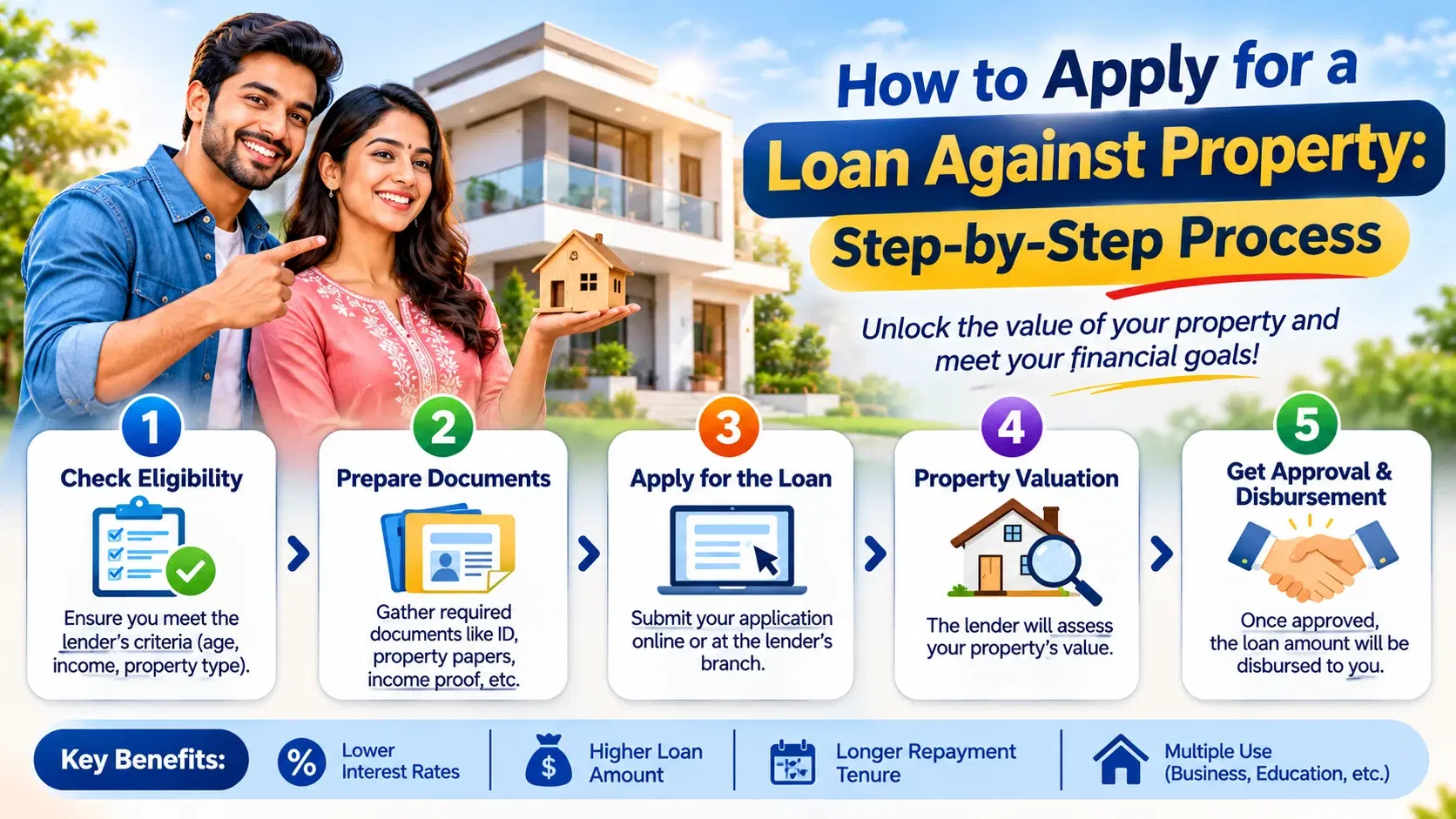
The process of a loan against property involves seven steps, which are eligibility check, application, document submission, property valuation, legal and technical verification, sanction and finally, mortgage registration and disbursal. If you own a property and want to know how to apply for Loan Against Property (LAP), this step-by-step guide is for you.
What is Loan Against Property?
A loan against property is a secured loan where you borrow money by pledging your property. Usually, you still have access to the property while you repay the loan. The amount you can borrow depends on the value of the property and your income. If you do not repay the loan as agreed, the lender can take legal action on the property under the loan agreement and the law.
What are the Steps to Apply for a Loan Against Property?
Here are the seven stages of the loan against property process:
- Eligibility check: See if you meet the lender's basic rules. You can check the eligibility calculator if the documentation is too much to read.
- Application: Apply online on the website or visit your nearest branch.
- Document submission: Share your KYC, income and property papers with our Sales or Branch Manager during the first visit.
- Property valuation: The lender's valuer assesses your property's market value.
- Legal and technical verification: The lender checks the title and the building.
- Sanction and offer: The lender issues a sanction letter with the loan terms.
- Mortgage registration and disbursal: The mortgage is created and the money is paid out.
Step 1: How Do I Check My Eligibility First?
Start with an eligibility check. It costs nothing, and it saves you from a wasted hard inquiry on your credit report. A hard inquiry leads to a drop in credit score, which signifies that you may have applied for some form of credit with an NBFC or bank.
At Ambit Finvest, following are the main criteria:
- CIBIL score of 675 or above
- Age between 23 and 65 years
- At least 3 years of business vintage
- A property with a clear, marketable title
The lender reviews your property, checks your documents and confirms the final terms. Read our guide on loan against property eligibility and LTV for more details. You can also use our business loan eligibility tool for a quick estimate.
If your credit report has errors, fix them first. Do not send many loan applications at the same time.
Step 2: Can I Apply for a Loan Against Property Online?
Yes, you can start online. But property loans also need a physical visit, so the process is digitally assisted, not fully online.
The loan against property process online usually goes like this:
- You enter basic details about your business and your property.
- You verify your mobile number with an OTP.
- A Sales representative will connect with you, verify details and pass on the details to your nearest branch manager.
For property verification, the lender will send a branch manager to verify the property.
Want to understand the eligibility criteria before you apply? Read this guide to business loan eligibility for shopkeepers.
Step 3: What Documents Do I Need to Submit?
Document submission has three parts:
- KYC: proof of identity and address, such as Aadhaar, PAN or a passport.
- Income papers: bank statements, income tax returns and business proof.
- Property papers: sale deed, title papers, approved building plan and tax receipts.
Keep your original papers safe and share clear copies. For the complete list, see our guide to the documents required for a loan against property.
Step 4: What Happens During Property Valuation?
The lender appoints the valuer. The valuer visits your property and assesses it for market value. They consider location, size, age, condition, quality of construction and recent prices in the area.
The valuation may be lower than the price you have in mind. This estimated value is the basis for the loan amount, not your estimate. The valuation is an approximate for lending purposes. It is not a guaranteed selling price.
Step 5: What is Legal and Technical Verification?
This is the stage most borrowers understand least. The lender checks two things: the legal papers and the property itself.
Legal verification checks that the property can be safely mortgaged. It includes:
- Title search: The lender traces the chain of ownership to make sure the title is clear.
- Encumbrance check: The lender checks for existing loans, claims or court cases on the property.
- Approvals: The lender checks that the property papers and permissions are in order.
Technical verification checks the property on site. It looks at the quality of construction, the age of the building, its permitted use and how easy it would be to sell.
The common blockers found at this stage are:
- A broken title chain (a missing earlier deed)
- Unapproved or changed construction
- Pending property tax or other dues
If you know about any of these, sort them out early. Ask a property lawyer if you are unsure about a document.
Step 6: What is a Sanction Letter and What Should I Check in It?
A sanction letter, also called an offer letter, is the lender's written approval with conditions. It is not the money itself.
Read every line before you sign. Check these points:
- The sanctioned loan amount
- The loan tenure
- The EMI structure
- The charges, including the processing fee and any other fees
- Your name and the property details
- The conditions you must meet before disbursal
If something is unclear, ask the lender to explain it. Sign only when you are sure you understand every condition.
Step 7: What are Mortgage Registration and Disbursal?
This is the final stage. After you accept the sanction letter, three things happen:
- Mortgage registration: The mortgage on your property is created in favour of the lender. It may be a registered mortgage or an equitable mortgage depending on the rules of your state.
- NACH mandate: You have set up an auto-debit (NACH mandate) to facilitate timely payment of your EMIs from your bank account.
- Disbursal: The lender pays the loan amount into your bank account. Sometimes this is done in parts.
Your original property papers are held by the lender until the loan is paid off in full. When the loan is closed, the paperwork is given back to you.
Check the loan statement to know the amount you have received, the date of your first EMI and the amount of EMI after disbursal.
How Long Does the Whole Loan Against Property Process Take?
The turnaround time for loan against property process is not defined as there are many factors to completion. Sometimes, the paperwork may take time and sometimes, the technical and legal verification may raise queries. The credit team may also have a few queries to ensure that they are giving loan to the right applicant. You can safely assume that the process takes almost 15-30 days from application, based on how fast the process is, customer readiness in paperwork, etc.
Have your KYC, income & property papers ready to keep things moving. Respond quickly to calls and requests. Files that are complete and accurate tend to move faster. We can't promise a date, but a clean file helps.
Comparing the full process against other property-backed structures? The guide to SME business loan eligibility and the application process covers what to have ready at each stage.
Why do Loan Against Property Applications Get Delayed or Rejected?
Most delays and rejections come from a few common problems:
- Title issues: A broken chain of ownership, a disputed owner or missing earlier deeds.
- Unapproved construction: The building does not match the approved plan, or has unapproved changes.
- Credit profile: Your credit score is below the lender's norm, or you made many new loan enquiries while your application was being processed.
- Income mismatch: Income documents do not match your bank records.
- Property type or location: The property is in an area or category the lender does not fund.
Fixing these before you apply gives you a better chance. Approval is always subject to the lender's own checks.
Conclusion
The process for a loan against property is simple if you follow each step in an orderly manner. Get realistic, do the eligibility check, compare lenders, and know the terms. The faster you are with the process, coordination, paperwork, etc., the faster the process is completed, and higher the chance of disbursement happening on time. Read the sanction letter carefully before signing and verify the details after disbursal. Want to know your options? Learn more about Ambit Finvest and begin your application. Choose as per your needs, income and repayment capacity.
Frequently Asked Questions
| Recent Posts |
|---|
Business Loans for Women Entrepreneurs in India: Schemes and Options |
How to Improve Your CIBIL Score to Get a Business Loan |
Section 44AD Presumptive Taxation: Tax Rules & Filing |
MSME and Government Loan Schemes in India: A Business Owner's Guide |
Loan Against Property Eligibility: LTV, Age & Criteria |
Documents Required for a Loan Against Property |
Union Budget 2025: Key Reforms and Opportunities for MSMEs |
Used Car Loans: Meaning, Eligibility Criteria |
Unsecured Business Loan - All You Need To Know |
Business Loan Eligibility and Required Documents |
Top 5 Reasons to Get a Business Loan in India |
Collateral-Free Loans in India: How to Apply |
Types Business loan in india |
Unsecured Finance: Types, Definition, and How It Works |
How to choose the right business loan in india |
How to improve credit score importance ranges tips |
Business loan interest rates flat vs reducing |
| Secured Business Loan |
|---|
Loan Against Property Eligibility and LTV |
Documents Required for Loan Against Property |
Secured Business Loan in India |
Types of Secured Business Loan |
How to apply for Secured Business loan |
Eligibility Criteria for Secured Business Loan |
Document Required for Secured Business loan |
| Unsecured Business Loan |
|---|
Unsecured Business Loan - All You Need To Know |
Collateral-Free Loans in India |
Unsecured Business Loan in India |
Types of Unsecured Business Loan |
How to apply for Unsecured Business loan |
Eligibility Criteria for Unsecured Business Loan |
Document Required for Unecured Business loan |